




030.21Treatment plans
300+ treatment plans
119 for pests and 186 for diseases and other plant problems. We break down what you need to do with reminders on your calendar. See what we have covered by searching below.
- Algal leaf spot
- Alternaria leaf blight of carrot
- Alternaria leaf spot of brassicas
- Angular leaf spot of cucurbits
- Annual vinca Phytophthora
- Anthracnose
- Aphids
- Apple bitter rot
- Apple maggot
- Apple scab
- Apple white rot (Bot rot)
- Ascochyta blight of pea
- Asian citrus psyllid
- Asian longhorned beetle
- Asparagus beetle
- Asparagus purple spot
- Asparagus rust
- Aster leafhopper
- Aster yellows
- Aster yellows of carrot
- Avocado lace bug
- Avocado Phytophthora root rot
- Azalea leaf gall
- Bacterial canker of stone fruit
- Bacterial canker of tomato
- Bacterial leaf scorch (shade trees)
- Bacterial leaf spot of begonia
- Bacterial leaf spot of tomato and pepper
- Bacterial soft rot
- Bacterial soft rot (succulents and aroids)
- Bacterial speck of tomato
- Bacterial spot of stone fruit
- Bacterial wilt of cucurbits
- Bacterial wilt of tomato (Southern wilt)
- Bagworms
- Bean leaf beetle
- Bean rust
- Beet curly top virus
- Billbugs
- Black knot of cherry and plum
- Black rot of brassicas
- Black rot of grape
- Black spot of rose
- Black vine weevil
- Blackberry rosette (double blossom)
- Blister beetles
- Blossom-end rot
- Blueberry anthracnose fruit rot
- Blueberry maggot
- Botryosphaeria canker and dieback
- Botrytis / gray mold
- Box tree moth
- Boxelder bugs
- Boxwood blight
- Boxwood mite
- Boxwood psyllid
- Broad mite and cyclamen mite
- Bronze birch borer
- Brown garden snail
- Brown marmorated stink bug
- Brown patch (lawn)
- Brown rot of stone fruit
- Bulb mite
- Cabbage looper
- Cabbage root maggot
- Cabbage worm (imported cabbageworm)
- Camellia petal blight
- Carrot rust fly
- Cedar-apple rust
- Cercospora leaf spot
- Cercospora leaf spot of astilbe
- Cercospora leaf spot of beet
- Cercospora leaf spot of carrot
- Cherry leaf spot
- Chilli thrips
- Chinch bugs
- Chrysanthemum white rust
- Citrus canker
- Citrus melanose
- Citrus rust mite
- Citrus scab
- Citrus thrips
- Clover mites
- Clubroot
- Codling moth
- Cold and frost damage
- Coleus downy mildew
- Colorado potato beetle
- Common rust of corn
- Cooley spruce gall adelgid
- Corn earworm / tomato fruitworm
- Corn smut
- Crapemyrtle bark scale
- Crown gall
- Cucumber mosaic virus (CMV)
- Cutworms
- Cytospora canker
- Damping-off / Rhizoctonia seedling blight
- Daylily rust
- Diamondback moth
- Dianthus rust
- Diplodia tip blight
- Dogwood anthracnose
- Dollar spot (lawn)
- Downy mildew
- Drought stress
- Dutch elm disease
- Early blight of tomato/potato
- Eastern filbert blight
- Eastern tent caterpillar
- Edema (oedema)
- Eggplant lace bug
- Emerald ash borer
- Eriophyid mites
- Euonymus scale
- European corn borer
- European earwig
- Fairy ring (lawn)
- Fall armyworm
- Fall webworm
- Fig rust
- Fire blight
- Flea beetles
- Fluoride tip burn
- Foliar nematode
- Fourlined plant bug
- Fungus gnats
- Fusarium crown and root rot of asparagus
- Fusarium root rot of sweet potato
- Fusarium wilt
- Geranium bacterial blight
- Granulate ambrosia beetle
- Grape berry moth
- Grape downy mildew
- Grape leafhopper
- Grape phylloxera
- Grasshoppers
- Gray leaf spot of corn
- Gray leaf spot of St. Augustinegrass
- Greenhouse whitefly
- Gummy stem blight
- Halo blight of bean
- Harlequin bug
- Heat stress
- Hemlock woolly adelgid
- Herbicide drift damage
- Hibiscus sawfly
- Hollyhock rust
- Hosta virus X
- Huanglongbing / citrus greening (HLB)
- Hypoxylon canker
- Impatiens downy mildew
- Impatiens necrotic spot virus (INSV)
- Iris bacterial soft rot
- Iris borer
- Iron chlorosis
- Japanese beetle
- Lace bugs
- Large patch
- Late blight
- Leafhoppers
- Leafminers
- Lettuce mosaic virus
- Lily Botrytis blight
- Lily leaf beetle
- Lily mosaic virus complex
- Low humidity leaf browning
- Low light (leggy growth)
- Magnesium deficiency
- Magnolia scale
- Mealybugs
- Mechanical damage
- Mexican bean beetle
- Mole crickets
- Monosporascus sudden wilt of watermelon
- Mummy berry
- Narcissus basal rot
- Narcissus bulb fly
- Nitrogen deficiency
- Normal leaf and needle aging
- Northern corn leaf blight
- Oak wilt
- Olive fruit fly
- Olive knot
- Onion maggot
- Onion neck rot
- Onion thrips
- Onion white rot
- Orange rust of brambles
- Oriental fruit moth
- Overwatering
- Pansy anthracnose
- Pea aphid
- Pea weevil
- Peach leaf curl
- Peach scab
- Peach twig borer
- Peachtree borer
- Pear psylla
- Pear scab
- Pear slug
- Pear trellis rust
- Pecan nut casebearer
- Pecan scab
- Pecan weevil
- Peony Botrytis blight
- Peony leaf blotch (peony measles)
- Persea mite
- Phomopsis blight of juniper
- Phomopsis cane and leaf spot
- Phosphorus deficiency
- Phytophthora blight
- Phytophthora root rot
- Pickleworm
- Pierce's disease (grape)
- Pill bugs / sow bugs
- Pine sawflies
- Plum curculio
- Plum pox virus (Sharka)
- Potassium deficiency
- Potato scab
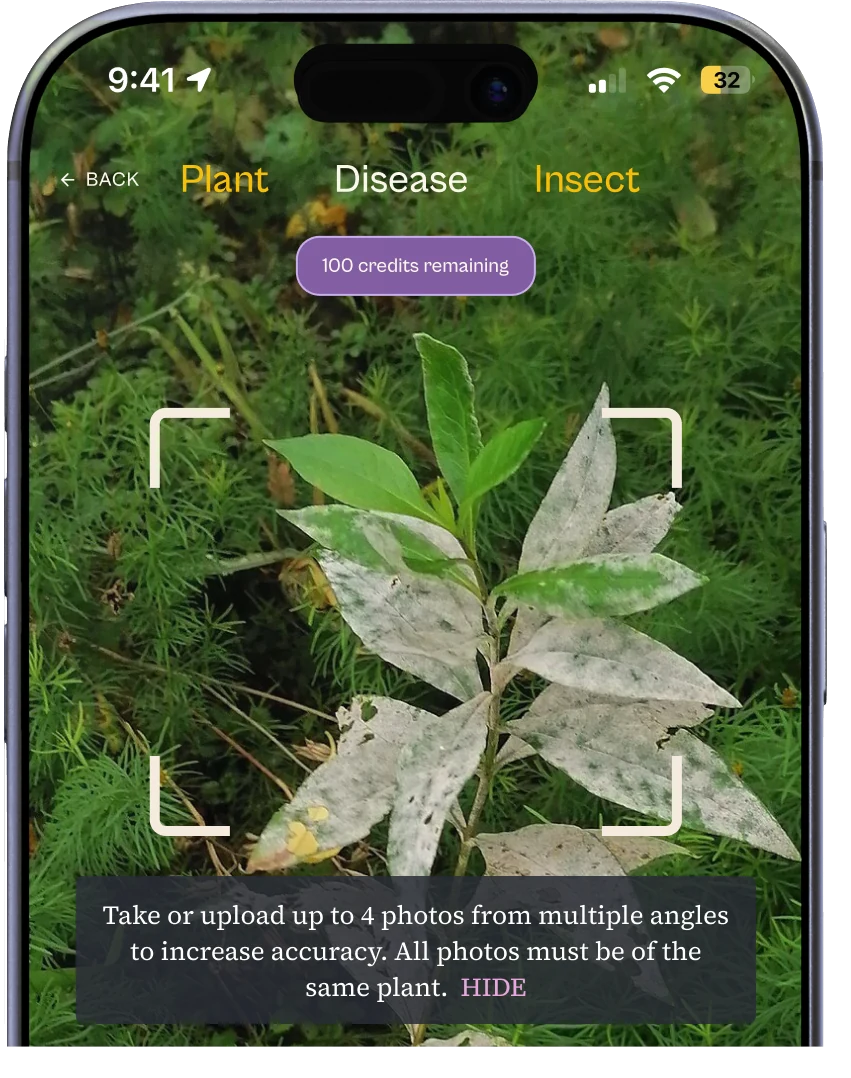
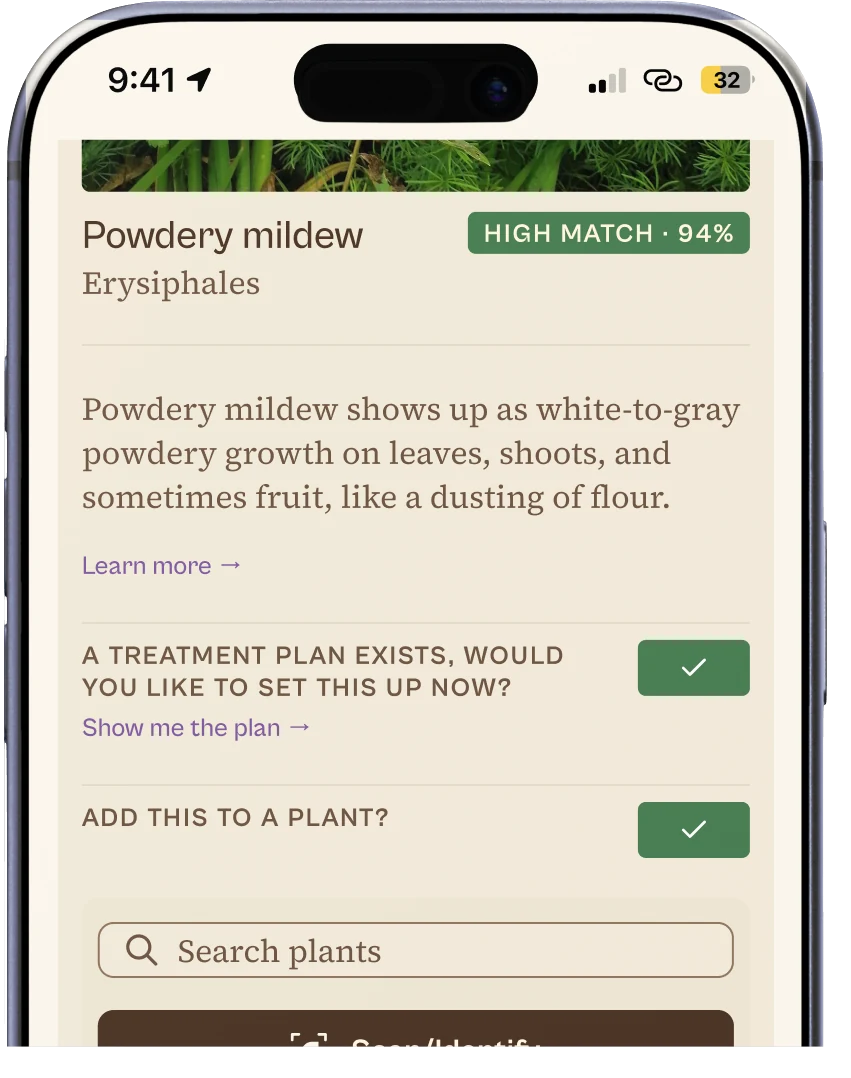
- Powdery mildew
- Pseudocercospora leaf spot
- Pythium blight (lawn)
- Pythium root rot
- Raspberry cane blight
- Raspberry crown borer
- Red stele root rot
- Red thread (lawn)
- Rhizoctonia stem canker and black scurf
- Rhizosphaera needle cast
- Root mealybug
- Root-knot nematode
- Rose mosaic
- Rose rosette disease
- Rose rust
- Rose sawfly (roseslug)
- Salt toxicity
- Salvia downy mildew
- San Jose scale
- Scale insects
- Sclerotinia / white mold
- Seiridium canker
- Septoria leaf spot of black-eyed Susan
- Septoria leaf spot of tomato
- Silverleaf whitefly
- Slugs
- Snapdragon rust
- Snow mold (lawn)
- Sod webworms
- Sooty blotch and flyspeck
- Sooty mold
- Southern blight
- Southern corn leaf blight
- Spinach anthracnose
- Spongy moth (formerly gypsy moth)
- Spotted cucumber beetle
- Spotted lanternfly
- Spotted wing drosophila
- Spring dead spot
- Springtails
- Squash bug
- Squash mosaic virus (SqMV)
- Squash vine borer
- Stewart's wilt
- Strawberry anthracnose fruit rot
- Strawberry crown moth
- Strawberry leaf spot and leaf scorch
- Strawberry leather rot
- Striped cucumber beetle
- Sudden oak death
- Sunburn / sunscald
- Sunflower downy mildew
- Sunflower moth
- Sweet potato scurf
- Sweetpotato weevil
- Tar spot of maple
- Target spot of tomato
- Tarnished plant bug
- Thrips
- Tobacco mosaic virus (TMV)
- Tomato brown rugose fruit virus (ToBRFV)
- Tomato fruit cracking
- Tomato hornworm
- Tomato leaf mold
- Tomato mosaic virus (ToMV)
- Tomato russet mite
- Tomato spotted wilt virus (TSWV)
- Tomato yellow leaf curl virus (TYLCV)
- Transplant shock
- Tulip fire
- Two-lined chestnut borer
- Two-spotted spider mites
- Verticillium wilt
- Walnut blight
- Walnut husk fly
- Western cherry fruit fly
- White grubs
- White pine blister rust
- White rust of brassicas
- White rust of spinach
- Wireworms
- Woolly apple aphid
- Zinnia Alternaria blight
- Zucchini yellow mosaic virus (ZYMV)
